- Home
- Applications
- Industries Using Nordfab QF Ducting
Food and Pharmaceutical
Food and Pharmaceutical
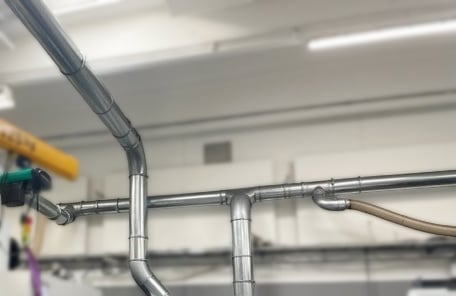
The right ducting to create safe and efficient environment in the food and pharmaceutical industry
Dust extraction and process ventilation are critically important in both the food waste environments and pharmaceutical industries because airborne particles pose serious risks to product safety, worker health, and regulatory compliance.
In food-waste environments, cross‑contamination, mould growth, pathogen spread, and compromised hygiene standards are the main risks of poor dust extraction systems. Effective process ventilation helps prevent airborne contamination, reduces the spread of dust, allergens, and microbes, and supports compliance with strict hygiene regulations.
In the pharmaceutical sector, manufacturing processes involving powders and active pharmaceutical ingredients (APIs) generate hazardous fine dusts that can endanger workers, interfere with machinery, and cause cross‑contamination between drug batches. Robust dust extraction and suitable ducting systems are therefore essential to protect employee health, maintain cleanroom classifications, and meet stringent GMP and regulatory standards. Together, these systems ensure cleaner air, safer work environments, and consistent product quality in two of the world’s most tightly regulated industries.
Critical dust extraction points in the food and pharmaceutical industry:
- Ingredient handling & raw material dispensing release airborne dust when powders or dried organic materials are scooped, poured, dosed, or weighed.
- Mixing, blending & agitation processes liberates fine particulates, whether from decomposed food waste or active pharmaceutical ingredients (APIs).
- Conveying, chutes & material transfer systems produces dust as material flows, drops, or changes direction.
- Milling, grinding, crushing or size‑reduction equipment generate high volumes of fine dust, requiring strong extraction to avoid contamination and hazards.
- Cleaning, sieving & screening operations disturb settled dust and generate airborne particulates, making these shared high‑risk points.